Your panel was sized for 1972. Your house isn't.
Heat pumps, induction ranges, hot tubs, EVs, a shop full of tools. We upgrade Northern Colorado homes to modern 200-amp service — permitted, inspected, and done in a day or two.
Six signs your panel is past its service life
You don’t need all six. One or two is usually enough to get it looked at.
Breakers trip constantly
Especially when the microwave and the toaster run together. That's a circuit at capacity, not a defective breaker.
No open breaker slots
A panel packed full — or stuffed with tandem "cheater" breakers — can't take another circuit for the remodel you're planning.
Federal Pacific or Zinsco
These brands have a documented history of breakers that fail to trip under load. Most insurers and home inspectors flag them on sight.
Heat, buzzing or scorch marks
A warm panel cover, a buzzing sound, or any browning around a breaker means loose or arcing connections. Call about this one today.
You're adding a big load
EV charger, hot tub, air conditioning, a garage shop. All of these need capacity your existing service may not have.
Fuses, not breakers
If you're still screwing in fuses, the service is likely 60 amps and decades past its design life.
What 200-amp service actually buys you
The number on the main breaker is your home’s total electrical budget. Going from 100 to 200 amps doubles it — and modern panels have far more slots to spend it with.
- Room to grow — 40+ circuit spaces instead of 16 to 20 that are already full
- Big appliances become possible — EV charger, hot tub, AC and induction range can coexist
- Modern safety devices — AFCI and GFCI breakers older panels can't accept
- Insurance and resale — obsolete panels come up in every inspection
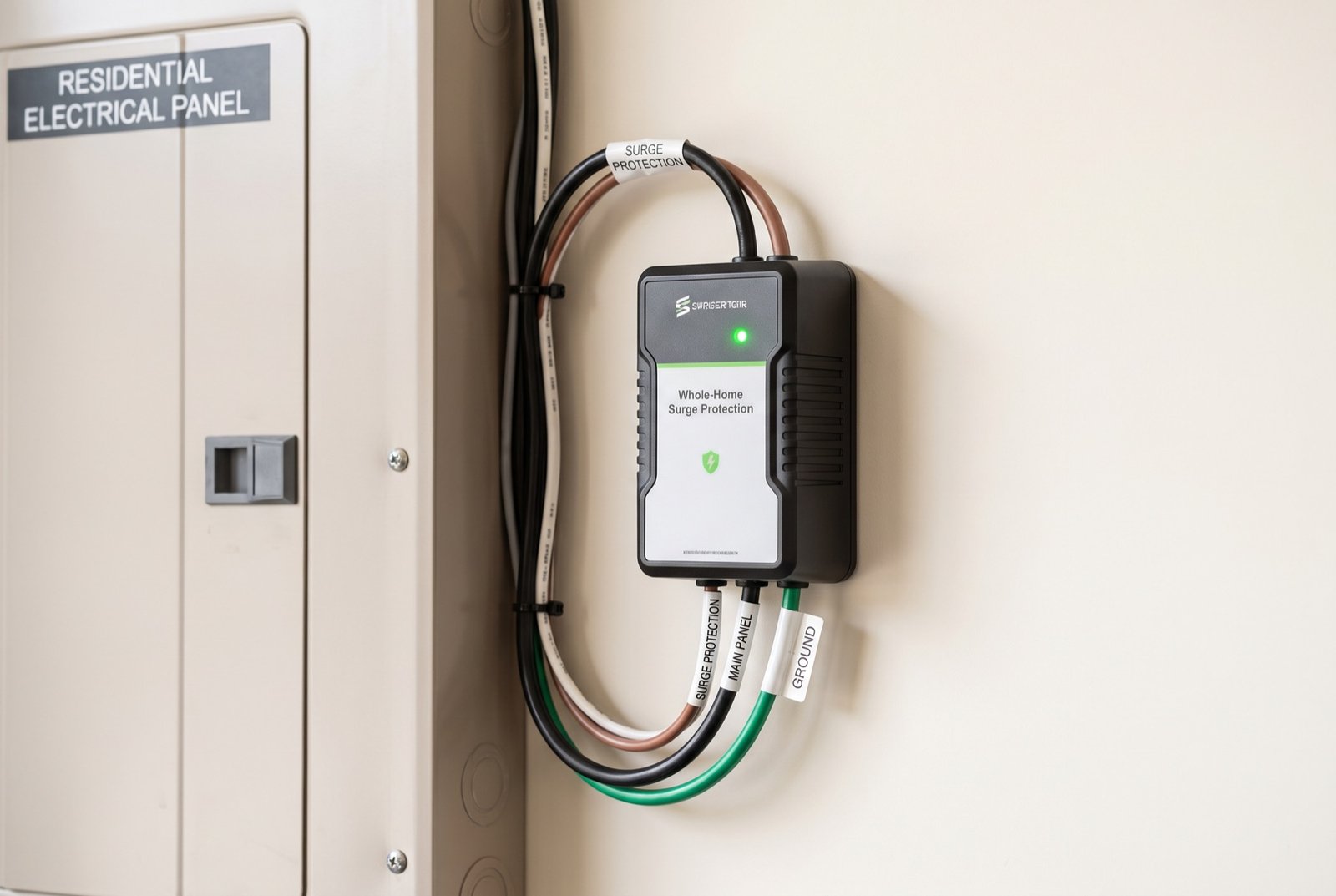
- Surge protection mounts right in the new panel while we're already in there
What a panel upgrade day looks like
Most residential upgrades are a one to two day job. Here’s the sequence so nothing surprises you.
Site visit & load calculation
We measure your actual demand, check the meter, mast and grounding, and confirm what the utility requires at your address.
Permit & utility scheduling
We pull the electrical permit and coordinate the disconnect with your utility. You don’t make any of those calls.
Install day
Power goes off in the morning. New panel, breakers, grounding and bonding installed, every circuit labeled clearly. Power’s back the same day.
Inspection
The inspector comes out and signs it off. You get the permit paperwork for your records — and for the next buyer.
Walkthrough
We walk you through the new panel, the labeling, and what the surge protector’s indicator light means.
Two-year warranty
Workmanship warranty in writing, plus the manufacturer warranty on the equipment itself.
Why we won't quote you over the phone
Two houses on the same street can differ by thousands of dollars. What moves the number:
- Your current service size — 60, 100, or 125 amps
- Whether the meter socket, service mast or weatherhead also need replacing
- Overhead service versus underground lateral
- How far the panel sits from the meter, and what's in the wall between them
- Grounding electrode condition — many older homes need a new ground rod and water bond
- Whether any existing circuits need code corrections before they land in the new panel
Our promise on price
We look at the job, then give you one flat written number that includes the permit. If we open something up and find a genuine surprise, we stop and talk to you before spending a dollar of it.
Questions we get on every quote
How long will my power be off?
Typically four to eight hours on install day. We start early so you’re back on by evening. If you work from home, tell us — we can plan around a meeting or set you up on a temporary circuit.
Do I have to be home?
For the estimate, yes — it helps to walk it together. On install day you need to be there at the start and the end, but not for the middle. The inspection usually requires someone present as well.
Is my Federal Pacific panel really dangerous?
Testing has shown a meaningful share of Stab-Lok breakers fail to trip on an overload, which is the one job a breaker has. They’re no longer accepted for new installation, and home inspectors flag them routinely. We’d replace one in our own house.
Will this help me sell the house?
It removes a common inspection objection and a financing headache. Buyers in Old Town regularly ask about panel age and service size, and a permitted 200-amp upgrade with paperwork is a clean answer.
Can you do it at the same time as my EV charger?
Yes, and it’s cheaper that way — one mobilization, one permit process, one disruption. If you’re planning an EV purchase in the next year, mention it at the estimate so we size the panel for it now. More on EV charger installs.
Find out what your panel upgrade costs
Free on-site estimate. Flat written price. Permit included.